Repair vs Replacement FAQ
Can my deck be repaired, or does it need to be rebuilt or fully replaced?
Most decks can be repaired if the structure is still sound and the issues are isolated.
Repair is often appropriate when:
- Problems are limited to deck boards, fascia, stairs, railings, or small sections of framing
- Posts, beams, and the ledger connection are solid and can be securely corrected
- The deck can be stabilized without rebuilding major sections
A rebuild or full replacement is often necessary when:
- Beams, posts, or the ledger connection are rotted, fractured, or structurally compromised
- Multiple framing members are failing or cannot be corrected in a reliable way
- The deck was built in a way that cannot be safely corrected through targeted repairs
An on site inspection confirms whether repairs will restore safe performance or if rebuilding is required.
How much does deck repair cost in Colorado Springs, and what factors affect pricing?
Deck repair costs depend on the scope of work and which structural components, if any, need to be corrected.
Typical repair cost ranges:
- Smaller repairs often cost $1,500 to $3,500
- Medium repairs often cost $3,500 to $10,000
- Larger repairs can reach $10,000 to $30,000 or more, depending on what needs to be corrected
What most affects cost:
- How many joists, beams, posts, or connections require repair
- Deck height and access
- Whether the scope includes stairs or railings and what is required to correct their attachment and support
- Whether exterior wall areas such as stucco need to be opened up to access structural connections, with stucco repairs typically completed by a separate contractor afterward
Many structural problems are not visible during an initial inspection. Pricing is based on the work that can be clearly seen and planned for at the time of evaluation, and the estimate is written as a defined scope with a specific price for that work.
My deck feels wobbly or unstable. Is this something that can be repaired, or does it mean there is a structural problem?
A wobbly or unstable deck is not normal, and the right fix depends on whether the movement is coming from a surface issue or the structure.
It may be repairable when:
- Movement is traced to a localized issue such as loose hardware, limited framing corrections, or railing components
- The posts, beams, ledger connection, and main framing are solid and can be securely corrected
It often indicates a structural problem when:
- The deck sways, shifts, or bounces due to failing connections, settling, or weakened framing
- Movement is traced to posts, beams, ledger attachment, footings, or other structural connections
An on site inspection identifies where the movement starts and confirms whether repairs will restore stability or if structural correction is required.
When do deck railings need to be replaced instead of repaired to meet safety and code requirements?
Deck railings can often be repaired when the posts and the structure they attach to are solid and can be securely corrected.
Repair is often appropriate when:
- Hardware is loose or aged and the posts and attachment points are structurally sound
- The issue is limited to rail components and can be corrected by proper re fastening
- The framing at the post connection is intact and able to hold fasteners properly
Replacement is often necessary when:
- Posts or the components they attach to are rotted, fractured, split, crushed, or cannot hold secure fasteners
- The railing cannot be securely re fastened to restore a solid attachment
- A standard adult can noticeably move or shake the railing with one hand and the movement is traced to failed material or failed attachment
An on site inspection confirms whether the posts and attachment points can be corrected or if replacement is necessary to restore a solid, secure railing.
When do deck stairs need to be repaired instead of replaced to meet safety and code requirements?
Deck stairs can often be repaired when the stair structure is sound and the issues are limited to surfaces or hardware.
Repair is often appropriate when:
- Treads are worn or damaged but the stringers are solid and properly supported
- Handrails are loose due to aging fasteners and the posts and framing are sound
- Minor corrections can restore safe walking and a secure grip
Replacement is often necessary when:
- The top stair connection, the stringers, or their attachment points show rot, decay, cracking, warping, or structural damage
- The stairs cannot be securely corrected using proper hardware and fastening methods
- The stair structure cannot be corrected to restore solid attachment and support
An on site inspection confirms whether repairs will restore safe attachment and support or if replacement is necessary.
Can rotten deck boards be replaced, or does rot usually mean the framing underneath is damaged too?
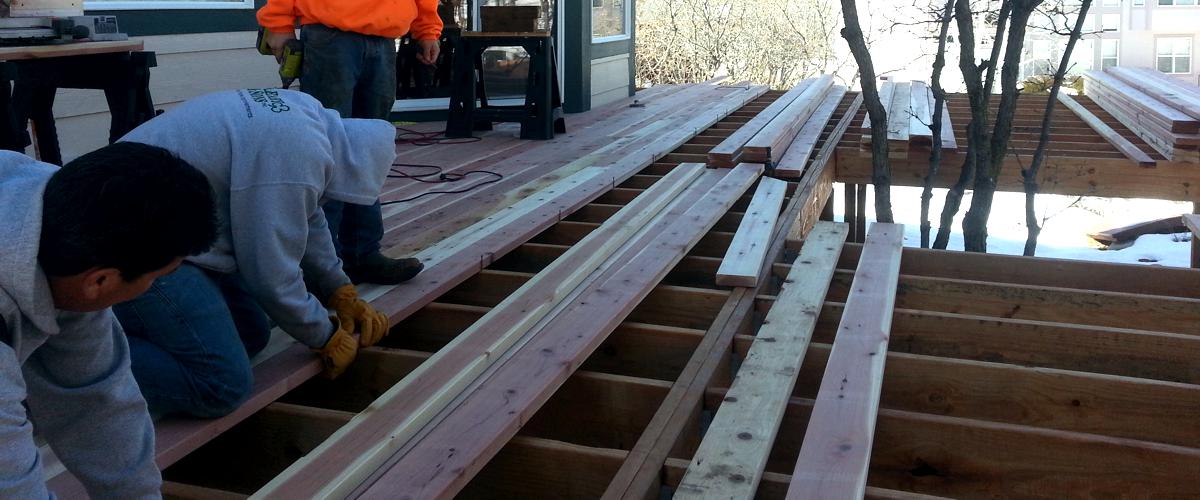
Rotten deck boards can often be replaced if the framing underneath is still solid and structurally sound.
Deck board replacement is often appropriate when:
- Rot is limited to the boards and the joists and beams below are firm and intact
- Fastener points and bearing areas remain solid
- Moisture conditions are addressed so new boards are not installed back into the same problem areas
Framing repairs or rebuilding may be necessary when:
- Joists, beams, or the ledger connection show rot, softness, or loss of material
- Rot is present at structural connections, bearing points, or common moisture trap areas
- The structure cannot safely support new materials without restoring framing strength
Wood rot is caused by prolonged moisture exposure, and when moisture issues are present, nearby wood can also be affected over time. An on site inspection confirms whether rot is isolated to the decking or if framing repairs are required.